
After delaying liberalisation for foreign banks by over a year due to global financial meltdown, the Reserve Bank on Tuesday decided to review its position by September this year in the wake of improving conditions worldwide.

Investor wealth eroded by Rs 4.46 lakh crore in a single day on Friday with the benchmark BSE Sensex tanking more than 1 per cent in line with global stocks rout. The 30-share BSE Sensex plunged 885.60 points or 1.08 per cent to close at 80,981.95 with 25 of its components declining and five ending with gains. During the day, it nosedived 998.64 points or 1.21 per cent to hit an intra-day low of 80,868.91.

The government is likely to name a successor to Rajan sometime this month

The RBI expects change, presumably commencing in the next Budget, but must hold its current view until this actually happens.

Ahead of the monetary policy review, RBI governor D Subbarao is expected to meet Prime Minister Manmohan Singh and finance minister Pranab Mukherjee on October 23.

Striking a different note from its peers, US brokerage Bank of America Securities has maintained that the Reserve Bank will leave rates unchanged next week, recognising growth-focused and capex-driven fiscal expansion, which though poses huge price pressure and interest rate risks later. The RBI's rate setting panel Monetary Policy Committee (MPC) will begin its deliberations next Monday and announce the policy moves on Wednesday (February 9) in the backdrop of a massive spike in bond yields post the Budget. Almost all major central banks are in the process of hiking rates to tame inflation.

The pace of loan growth among public sector banks (PSBs) has seen a surge in the financial year 2024-25, and this is an exception to the overall moderation in bank credit during FY25. PSU banks' share in incremental credit rose to 57.3 per cent in March from 51.7 per cent a year ago, according to the Reserve Bank of India's (RBI's) Monetary Policy Report (April 2025).

The retail inflation eased to a four-month low of 4.87 per cent in October, mainly due to cooling prices of food items, government data showed on Monday. The Consumer Price Index (CPI) based retail inflation fell to a three-month low of 5.02 per cent in September. The previous low inflation was recorded at 4.87 per cent in June.

Urjit Patel panel wanted all members to be appointed by RBI

Arun Jaitley on Sunday said monetary policy plays an important role in stimulating growth.

Tata Steel was the top gainer in the Sensex pack, rising around 4 per cent, followed by Infosys, Bajaj Finance, TCS, HCL Tech, ICICI Bank and Tech Mahindra. On the other hand, Bharti Airtel, M&M, L&T and Axis Bank were among the laggards.
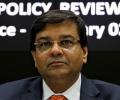
Market participants must appreciate that staying cautious is a virtue for central bankers and should not expect a sudden reversal in the formal monetary policy stance.

Retail inflation dipped marginally to 6.44 per cent in February, mainly on account of a slight easing in prices of food and fuel items though it remained above the Reserve Bank's comfort level of 6 per cent for the second month in a row. As per the government data released on Monday, the Consumer Price Index (CPI)-based inflation was at 6.52 per cent in January and 6.07 per cent in February 2022. The retail inflation rate for the food basket worked out to be 5.95 per cent in February, marginally lower than 6 per cent in January.

Retail inflation slipped to 1.54 per cent in September from 2.07 per cent in the preceding month mainly due to subdued prices of food items, including vegetables and pulses, according to government data released on Monday. The consumer price index (CPI) based inflation was 5.49 per cent in September 2024.

Wholesale price inflation (WPI) declined to a 14-month low of 0.39 per cent in May on easing prices of food articles and fuel, and experts said geopolitical tensions could push up prices.

'Once bitten, twice shy, I didn't take up the challenge this time...' 'I realised I had failed to follow my karma because I feared failure.'

Inflation target remains 5% for January 2017.

As deputy governor, Patel headed the RBI panel to draft the monetary policy report, which became the basis of the ongoing reforms at the apex bank

Reserve Bank Governor Shaktikanta Das on Wednesday said the decision to tweak policy rates was not in his hand as he himself is driven by the situation on the ground. In April, the Reserve Bank in a surprise move hit the pause button and decided to keep the key benchmark policy rate at 6.5 per cent. Prior to it, the Reserve Bank of India (RBI) was on a rate hiking spree, raising the repo rate by 250 basis points since May 2022.
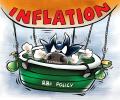
Inflation breached the upper end of the RBI's comfort level of 4 per cent plus-minus two percentage points.

Stuart A Davis, the chief executive officer at HSBC India, expects the Reserve Bank of India to increase repo and reverse repo rates by 25 basis points in its quarterly monetary policy review on July 27, as concerns over accelerating inflation and uncertain monsoon linger.

Calls for decisive fiscal policy action to revive growth
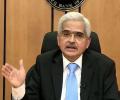
With inflation under control, the Monetary Policy Committee's (MPC's) job is to support growth because the economy had recovered well from the lows in the initial months of the pandemic, according to the panel's members, who met in the first week of this month. The minutes of the meeting show the Reserve Bank of India (RBI) governor in his statement said: "Given the sharp moderation in inflation along with a stable near-term outlook, monetary policy needs to continue with the accommodative stance to ensure that the recovery gains greater traction and becomes broad-based." Ashima Goyal, external member of the MPC, said: "The current macroeconomic configuration and its expected future evolution imply there is space for the MPC to continue to support the revival of the economy with inflation remaining in the target band."

Although there is headroom for further monetary policy action, at this juncture it is important to keep our arsenal dry and use it judiciously: RBI's Das.

Growth is coming from sectors which are interest rate-sensitive, says D Subbarao.

The economic growth is likely to moderate to 6.1 per cent, slowest in over seven quarters, from 6.6 per cent last year same period.

Wholesale price inflation eased to 2.05 per cent in March, as against 2.38 per cent in February, government data showed on Tuesday. The wholesale price index (WPI) based inflation, however, rose year-on-year.

The Reserve Bank will go for a "dovish pause" at Wednesday's policy review announcement amid developments such as a rise in inflation, government maintaining the inflation target band and a likely impact on growth due to local lockdowns on rising COVID-19 infections, analysts said on Monday. Economists at American brokerage Bofa Securities said price stability, growth and financial stability will become the prime focus areas for the central bank going forward. "The RBI MPC (Monetary Policy Committee) should deliver another dovish pause on Wednesday," it said. The policy announcement, the first for the fiscal, will come days after the government maintained the RBI's target to ensure inflation to be within 2-6 per cent band for five more years.

The MPC headed by RBI Governor Urjit Patel said that the recent excise duty cut by the government on petrol and diesel will help contain inflation.
In the last three years, public sector banks have responded to the RBI's policy rates more strongly than private banks.
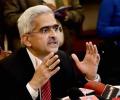
The uncertainty created by the jump in COVID-19 infections and localised lockdowns prompted RBI Governor Shaktikanta Das and other members of the rating setting panel MPC to unanimously vote for status quo in interest rates and an accommodative policy stance to support growth, as per minutes of the meeting released on Thursday. "The need of the hour is to effectively secure the economic recovery underway so that it becomes broad-based and durable," the Governor said during the three-day meeting of the Monetary Policy Committee (MPC) which ended on April 7. The renewed jump in COVID-19 infections in several parts of the country and the associated localised and regional lockdowns add uncertainty to the growth outlook, he observed, as per the minutes of the meeting released by the central bank.

The Reserve Bank on Wednesday announced the increase of the UPI Lite wallet limit to Rs 5,000 and per-transaction limit to Rs 1,000, in order to encourage wider adoption of the popular instant payment system through mobile phones. A limit of Rs 500 per transaction and an overall limit of Rs 2,000 per UPI Lite wallet, is presently applicable, with the facility of auto-replenishment. Unveiling the October bi-monthly monetary policy, Reserve Bank Governor Shaktikanta Das also said the per-transaction limit in UPI123Pay will be enhanced to Rs 10,000 from the current Rs 5,000.

Hinting at some tightening of the monetary policy on Friday, the Reserve Bank on Thursday said inflation is a major challenge and would address it without hurting the growth.

On the back of sound macroeconomic policies and softer commodity prices, India's growth momentum is likely to be sustained in 2023-24 in an atmosphere of easing inflationary pressures, said the Reserve Bank's annual report released on Tuesday. It, however, added that slowing global growth, protracted geopolitical tensions and a possible upsurge in financial market volatility following new stress events in the global financial system could pose downside risks to growth. "On the back of sound macroeconomic policies, softer commodity prices, a robust financial sector, a healthy corporate sector, continued fiscal policy thrust on quality of government expenditure, and new growth opportunities stemming from global realignment of supply chains, India's growth momentum is likely to be sustained in 2023-24 in an atmosphere of easing inflationary pressures," it said.

Referring to the proposed new monetary policy framework, it said in the weeks ahead, government and RBI will work towards it.

Tomorrow's review could also turn out be the last policy anchored by Rajan if the proposed Monetary Policy Committee (MPC) is put in place before the next review due on August 9.

The government on Monday said inflation continues to remain a concern, but exuded confidence that the RBI's monetary policy will lead to moderation in inflation numbers in the coming months.
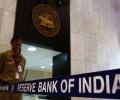
The RBI is not statutorily independent from the government but has long enjoyed wide latitude

As the policy rate has seen a steady increase since May 2022, the percentage of loans offered at interest rates below 8 per cent have declined sharply, dropping from 53 per cent in March 2022 to 18 per cent by June 2023, according to a report by the Reserve Bank of India (RBI). The share of bank loans with interest rates of 10 per cent or higher rose from 22 per cent to 34 per cent during this period, reflecting the impact of a 250 basis point (bps) hike in the policy repo rate by the RBI's Monetary Policy Committee. In response to the rise in repo rate, 32 domestic banks have made corresponding upward revisions to their repo-linked external benchmark-based lending rates (EBLRs), aligning them with the magnitude of the rate hike.

JSW Steel was the biggest gainer on the Sensex chart, rising 2.68 per cent, followed by Tata Motors, Mahindra & Mahindra, Tata Steel, Titan, ITC, Tech Mahindra, NTPC, Reliance Industries and Larsen & Toubro. In contrast, Bajaj Finance, Maruti, ICICI Bank, Power Grid, Asian Paints and Axis Bank were major laggards.
